
This dual-action system combines a coil spring and viscous fluid damper to provide exceptional shock absorption and vibration isolation. Resistoflex spring-viscous dampers are used in critical industrial and civil engineering projects.
Features:
Applications:
Spring-viscous dampers are widely used in:
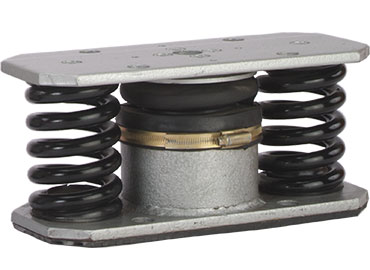
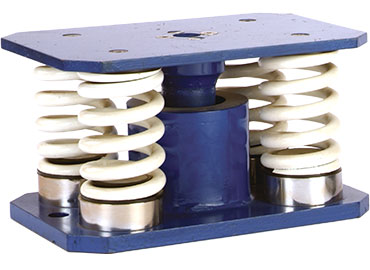
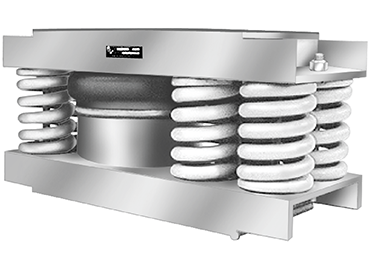
.png)
.png)
Frequently Asked Questions
What is a Spring Viscous Damper?
A spring viscous damper combines a coil spring and a viscous fluid damper. The spring provides restoring force while the fluid damper absorbs vibration energy, giving both support and smooth vibration control
How does a viscous damper work?
It contains a piston moving through a viscous fluid (such as silicone). As vibration occurs, the fluid resists motion, converting kinetic energy into heat and reducing vibration.
Where are these dampers typically used?
They’re widely employed in:
- Seismic protection of buildings and bridges
- Diesel generators and industrial machines
- HVAC systems and equipment, like chillers and fans
Why use a Spring Viscous Damper instead of just a spring or damper?
Springs alone store and release energy, while dampers dissipate it. Together, they control both motion amplitude and oscillation duration, offering superior vibration management
How do viscous dampers act as an anti-vibration solution?
Viscous dampers serve as an effective anti-vibration solution by absorbing and dissipating dynamic energy caused by vibrations. They operate by converting mechanical energy into heat through the movement of a piston inside a viscous fluid. This damping action reduces oscillations, minimizes resonance, and controls excessive motion in structures and machinery. As a result, they enhance stability, prolong equipment lifespan, and improve structural performance during both regular operations and dynamic events like earthquakes or wind loads.
Do viscous dampers require regular maintenance?
Generally, they require are low-maintenance. However, periodic checks are advised to ensure there’s no fluid leakage, spring fatigue, or misalignment—especially in long-term, major and critical installations
What is a torsional viscous damper?
A torsional viscous damper resists rotational (twisting) vibrations.
It’s often used in engine crankshafts or rotating machinery to absorb torsional shock
and smooth rotational motion.
Can the damping performance change with temperature?
Yes. Since fluid viscosity can vary with temperature, a damper may behave slightly differently in hot or cold conditions. Quality silicone fluids and proper design help minimize this effect
Is the damping force proportional to vibration speed?
Yes—viscous damping force is directly proportional to velocity. Faster motion produces more fluid resistance, which increases energy dissipation
How do I choose the right damper system for my machine?
Consider:
- Vibration frequency and amplitude
- Mounting direction (vertical, lateral, or torsional)
- Environmental conditions like temperature and corrosion
Unlock Your Potential with Expert Guidance
We’re dedicated to providing
custom-engineered
solutions that enhance efficiency and performance.
Let’s work together to achieve your project goals seamlessly.
